
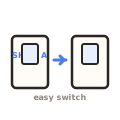
Your kirana has sold the same rice for years. Last month a delivery app listed the same bag for twenty rupees less and dropped it at your door by noon. You moved your order without thinking. Any shop can stock that rice. You were not tied to any of them. That is a commodity — easy to copy and easy to leave.
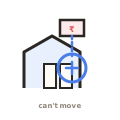
Your salary has landed in the same bank account for three years. A new bank offered a higher interest rate and a free locker. You did not move. Opening a savings account is easy — every bank will give you one tomorrow. Moving your salary is not — EMIs, UPI, and three apps are tied to this account. Here only one wall exists: copying is easy, leaving is not.
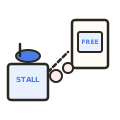
The chai stall outside your office makes it stronger than anything from a machine. The vendor has boiled in the same pot for years and kills the heat at the right moment. Last month your building put a free tea machine in the pantry and most people stopped walking out. Here the other wall exists: his chai is hard to copy, but drinking the free cup upstairs is not.

Your phone is four years old and slow. A salesman showed you a faster model for less. You did not buy it. Your photos, your UPI, your WhatsApp groups, and the muscle memory in your thumb all live on this screen. A rival would need years to copy everything stored here, and you would need weeks to move it even if they did. Hard to copy and hard to leave — that is a moat, both walls together.
Your rice order, your salary account, the chai stall, your phone — four walls. The rice had neither. The salary account had one: leaving hurts. The chai stall had the other: copying hurts but leaving does not. The phone had both.
Easy to copy and easy to leave is a commodity. One wall is a partial moat. Both walls is the best case. If they can copy it tomorrow and undercut you next week with nobody staying, you are selling rice.